News Rendezvous
In politics, perception is not everything, but it is almost everything. And perception is built on narrative.The most effective public relations strategies are not built on lies. They are rooted in truth, carefully selected, framed, and sustained. Falsehood, no matter how loudly amplified, is structurally weak; it eventually collapses under the weight of reality. Yet, Nigeria’s political space is increasingly crowded with pseudo-strategists who confuse propaganda for communication, dragging their principals into avoidable crises, as seen in the growing perception challenges surrounding Bola Ahmed Tinubu and his media machinery.
As 2027 approaches, aspirants are emerging. But many are already making a fatal mistake: they are borrowing narratives instead of building their own. In politics, that mistake is often irreversible.Campaigns without a coherent narrative are dead on arrival. A political narrative is not a slogan; it is a governing philosophy that connects identity, performance, and aspiration. Without it, candidates drift. With it, even imperfect candidates can command loyalty and inspire belief.Nigeria offers powerful examples. The Kwankwasiyya Movement, built around the symbolic red and white cap of Rabiu Musa Kwankwaso, remains one of the most enduring grassroots narratives in modern Nigerian politics. It is sustained not by money, but by memory, memory of performance, inclusion, and identity. Similarly, Peter Obi engineered a disciplined and coherent narrative framework built on the transition from consumption to production, the aspirational message that “a new Nigeria is possible,” and the credibility anchor of “my record.” These were not random slogans; they were aligned, repeatable, and believable. That is what narratives do, they move belief from the politician into the people. The growing convergence of these narrative forces into a broader political bloc should send a clear signal to any serious contender heading into 2027. Atiku does not have, that is why he has been difficult to sell over the years. They just come together, structure a compelling campaign slogan, form songs and followership around him and quickly and quietly dissipate after every election, not so with Obi/Kwankwaso, their stories go everywhere they go.

Flashback to the 2023 election cycle, which demonstrated both the power and the danger of narrative construction. The “Emilokan” message associated with Bola Ahmed Tinubu was bold and deeply personal, rooted in his long-standing political mythology. However, the simultaneous promise to “continue from where Muhammadu Buhari stopped” introduced a fundamental contradiction. A candidate cannot convincingly present himself as both a disruptor and a continuation. That tension weakened narrative clarity, and today, the consequences are increasingly visible in the court of public sentiment, emilokon equals sense of entitlement while continuing from where Buhari stopped, is more of a promised disaster, so right now, it is immaterial how Tinubu or his associates fared 2023 to date, those two narratives have however, backdated his assessment profile to include 2015 – date.
Symbols, in politics, are powerful, but only when they remain authentic and contextually relevant. The spread of the so-called “infinity cap” represents a striking case of symbolic miscalculation. What once may have been a contextual emblem has now evolved into a nationally contested symbol, increasingly interpreted through the lived realities of economic hardship, policy backlash, and widespread public frustration. Symbols absorb meaning from reality, and right now, reality is not flattering. To adopt such a symbol is to inherit its baggage.
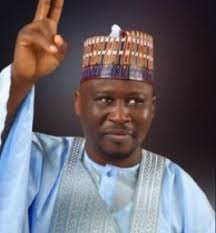
This brings us to the most revealing case in this unfolding narrative battle: Governor Ahmadu Umaru Fintiri. Before his political realignment, Fintiri had built something rare in Nigerian politics, a clear, organic, and people-owned narrative. His identity was anchored in a culturally resonant native Adamawa cap, the “Fresh Air” movement, and a governance philosophy captured in the phrase “no one is left behind, nothing is left untouched.”

This was not cosmetic branding; it was a lived political identity, deeply internalised by the people. And crucially, it was working.One of the strongest pillars of this identity was his deliberate augmentation and expansion of traditional institutions across Central and Northern Adamawa.
By creating seven new chiefdoms and emirates, his administration extended recognition to previously underrepresented communities, strengthened grassroots governance, and rebalanced cultural and political inclusion across the state. This intervention becomes even more significant when viewed alongside Southern Adamawa’s already established network of nearly eight historic kingdoms.
What Fintiri effectively achieved was the creation of a statewide architecture of cultural legitimacy.Across these structures, both old and newly established, his native cap evolved into more than a personal symbol. It became a shared expression of inclusion, representation, belonging, pride, and ownership. It was not imposed; it was embraced. That level of organic symbolic adoption is rare, and politically invaluable.This is precisely why his recent shift raises serious strategic concerns. By moving toward the symbolism and narrative orbit of Bola Ahmed Tinubu, Fintiri is not merely aligning politically; he is exchanging strengths for vulnerabilities. He risks losing narrative ownership, cultural authenticity, grassroots emotional connection, and message clarity. At the same time, he inherits the burdens of national economic discontent, policy backlash, and a growing credibility crisis.
In effect, he has traded a working, people-owned narrative for one struggling with acceptance. For anyone grounded in historical analysis like Gov Fintiri, this is not a subtle shift, it is a glaring strategic contradiction.The danger here is not just loss; it is reduction.
A governor who has built institutional legitimacy, cultural alignment, and grassroots trust should not appear subordinated to a contested national identity. In political optics, that transition is unforgiving. It transforms a narrative owner into a narrative borrower, and an independent political force into a political extension. That is how a big politician begins to look small, not by losing office, but by losing identity. If anything, the political reality suggests that the ruling party needed Fintiri more than he needed it. His narrative should have been an asset to strengthen the party, not one to be diluted in the process.

The Gov. Fintiri political machinery should pause and ponder, what is the political significance of the New APC slogan, ARH226M, in his function to Bola Ahmed Tinubu? This slogan is not catchy, interesting, repeatable, has no message of its own or has no any kind of resonance with the people who would form his campaign base? This ARH226M has a larger capacity to backfire than it has to succeed as a campaign narrative! It looks and sounds like a chemistry or physics formula!!! This is where the contrast with figures like Rabiu Musa Kwankwaso and Peter Obi becomes instructive.
Both men have moved across political platforms at different times, yet neither abandoned his narrative identity. Kwankwaso retained his red and white cap; Obi sustained the Obedient movement. They understand a fundamental principle: parties are vehicles, but narratives are engines.
A politician may change the vehicle, but must never discard the engine that drives public belief.Beyond individual actors, the ruling party itself appears to be undermining its own narrative stability, a behavior Gov Fintiri should move to upend instead of upholding. APC’s communication approach has increasingly leaned toward unnecessary political confrontation, over-amplification of opposition actors, and messaging that strains credibility. In attempting to suppress alternative platforms such as the ADC, it has inadvertently projected them into national prominence.
When political leaders and key figures, whether through overreach, misdirected commentary, or poorly calibrated responses, draw excessive attention to opposition movements, they grant them free visibility and legitimacy. What is presented as strategy increasingly appears as overextension.
When communication drifts into exaggeration or distortion, it does more than weaken a message, it erodes trust in the system itself. Public perception begins to shift from confidence to skepticism, and from skepticism to outright rejection. What should have been a controlled narrative environment becomes an open field for opposition growth.

Political language in Nigeria travels fast, particularly from influential hubs like Kano and Lagos. Street-level rhetoric, often raw and unfiltered, has the power to redefine political actors overnight. Once negative labels gain traction, they can overshadow achievements, reshape public perception, and attach reputational burdens that are difficult to reverse.
This is how narratives harden, and once they do, they are remarkably resistant to correction.Even within the imperfections of Nigeria’s electoral system, one reality remains clear: elections are still significantly shaped by grassroots mobilisation, emotional connection, and narrative resonance. The people remain central, and the people respond to meaning, not machinery.
The 2027 election, therefore, will not be won on defections, slogans, or borrowed symbols. It will be won on narrative clarity. Those who define themselves, protect their identity, and align their message with the lived realities of the people will dominate. Those who abandon what works will struggle, regardless of resources or political alliances..
Governor Ahmadu Umaru Fintiri built a rare political asset, a trusted narrative, a shared symbol, and a culturally rooted identity. His native Adamawa cap, the Fresh Air philosophy, and his institutional reforms were not just political tools; they were a bond with the people.To abandon that bond for a struggling, externally defined narrative is not strategic alignment, it is a poor exchange. It is a gamble with political capital already earned.And in the battle for 2027, one truth will hold: Those who lose their narrative rarely win their elections, no matter how hard they try.
Billy Graham Abel, writes from Numan-Lamurde Axis

 News Rendezvous
Leave a comment