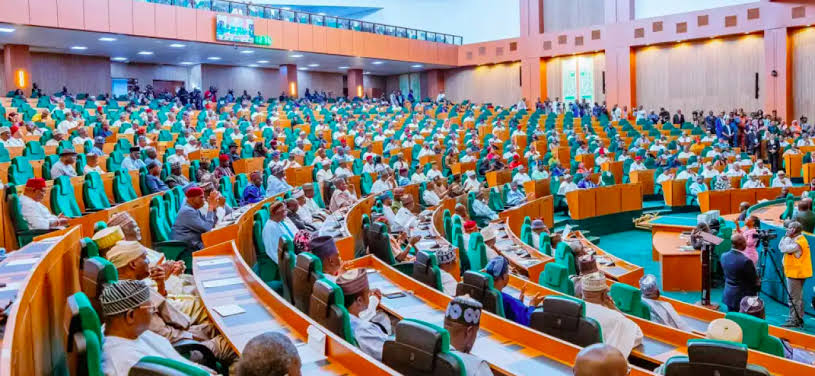
A group of lawmakers in Nigeria’s House of Representatives has raised serious concerns over alleged post-passage alterations to recently enacted tax reform laws, warning that the changes could amount to a constitutional breach and expose the country to legal and fiscal risks. The lawmakers alleged that tax bills passed by the National Assembly and signed into law by Bola Tinubu were subsequently altered before being gazetted and circulated by the Federal Government, without legislative approval.
The issue was formally raised on Wednesday during plenary when a member representing Sokoto State, Abdussamad Dasuki, invoked a matter of privilege, drawing attention to what he described as discrepancies between the harmonised versions of the tax bills approved by both chambers of the National Assembly and the gazetted copies currently in circulation.
Committee Finds Substantive Changes
According to a report compiled by concerned lawmakers and obtained by our correspondent, the alleged changes go beyond clerical or editorial corrections.
The document stated that following growing concerns, the House constituted a Select Committee on Post-Passage Alterations to investigate inconsistencies between votes and proceedings, Clerk-certified bills, and the final Acts.
The committee reportedly relied on forensic comparisons and independent legal opinions, concluding that several substantive provisions were inserted, modified, or deleted after the bills had been duly passed by the National Assembly.
The report alleged that oversight, accountability, and reporting mechanisms approved by parliament were removed in the final versions, while new coercive and fiscal powers, such as arrest powers, garnishment without court orders, compulsory foreign currency computations, and appeal security deposits, appeared without legislative authorisation. “These changes cannot be classified as clerical or editorial corrections,” the report stated.
Constitutional Concerns Raised
The lawmakers argued that Sections 4 and 58 of the 1999 Constitution vest law-making powers exclusively in the National Assembly, stressing that the executive has no authority to alter bills after passage.“Any post-passage alteration is ultra vires, unconstitutional, and void to the extent of the alteration,” the report warned, adding that affected provisions are vulnerable to judicial invalidation, potentially creating regulatory uncertainty and undermining investor confidence.
Dasuki: ‘What Was Passed Is Not What Was Gazetted’ Speaking during plenary, Dasuki said his legislative privilege had been breached, insisting that the versions currently being presented to Nigerians differ materially from what lawmakers voted on.“What was passed on this floor is not what is gazetted,” he said. “I voted on these bills, and what I am seeing in the gazetted copy is completely different.”
He called on the House leadership to compare the harmonised versions passed by both chambers with the gazetted Acts and urged that all relevant documents be brought before the Committee of the Whole for review and correction.Describing the development as unconstitutional, Dasuki warned that it undermines legislative authority and the integrity of the law-making process.
Speaker Assures House of Action
Responding to the allegations, the Speaker of the House of Representatives, Tajudeen Abbas, assured members that the leadership would investigate the matter and take appropriate steps in the national interest.
The lawmakers also recommended an immediate legislative review of all disputed provisions and urged the House to summon officials allegedly responsible for the alterations, in line with Sections 88 and 89 of the Constitution.
Background to the Tax Reforms
The disputed laws form part of a broad tax reform package signed by President Tinubu as part of his administration’s economic reform agenda, aimed at boosting revenue, expanding the tax base, and reducing Nigeria’s dependence on borrowing.The reforms include the Nigeria Tax Administration Act, the Nigeria Revenue Service Act, and amendments to the Joint Revenue Board framework.
They were passed in 2025 against the backdrop of low government revenue, rising debt servicing costs, and fiscal pressures following fuel subsidy removal and foreign exchange reforms.
However, the unfolding controversy has raised fresh questions about legislative oversight, the sanctity of the law-making process, and the legal foundation of the new tax regime, which is scheduled to take effect in January 2026.

 News Rendezvous
Leave a comment