By News Rendezvous, WASHINGTON, D.C., Nov. 2025
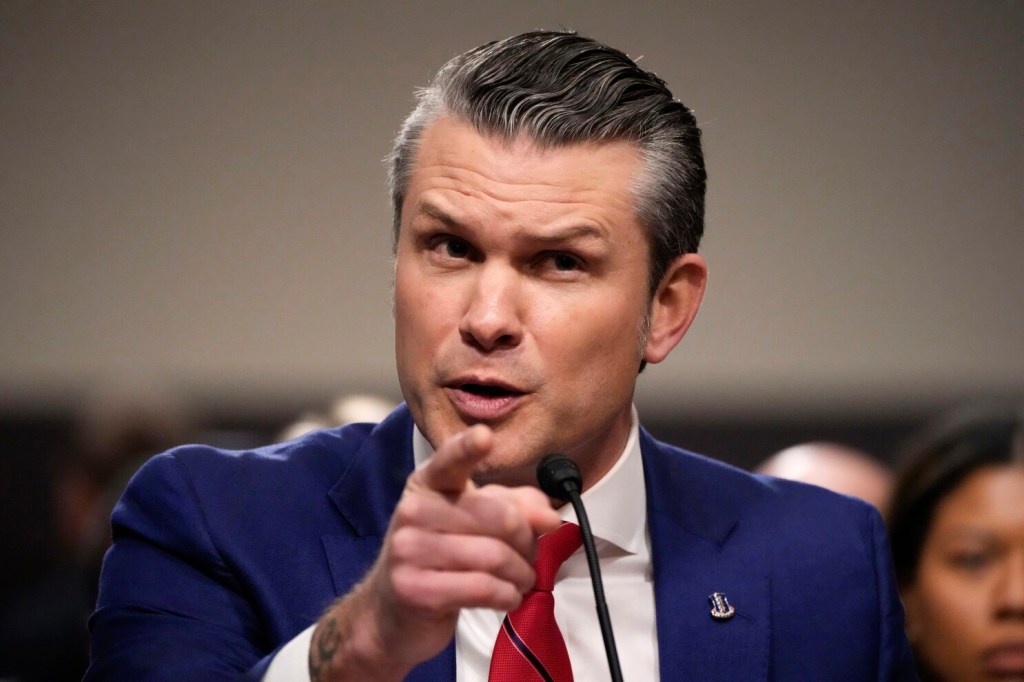
In one of the most forceful statements ever issued by a top U.S. defense official on Nigeria’s security crisis, United States Secretary of War, Pete Hegseth, has declared that the mass killing of Christians in Nigeria constitutes “genocide,” accusing both extremist groups and elements within the Nigerian government of enabling the violence through “inaction, corruption, and complicity.”
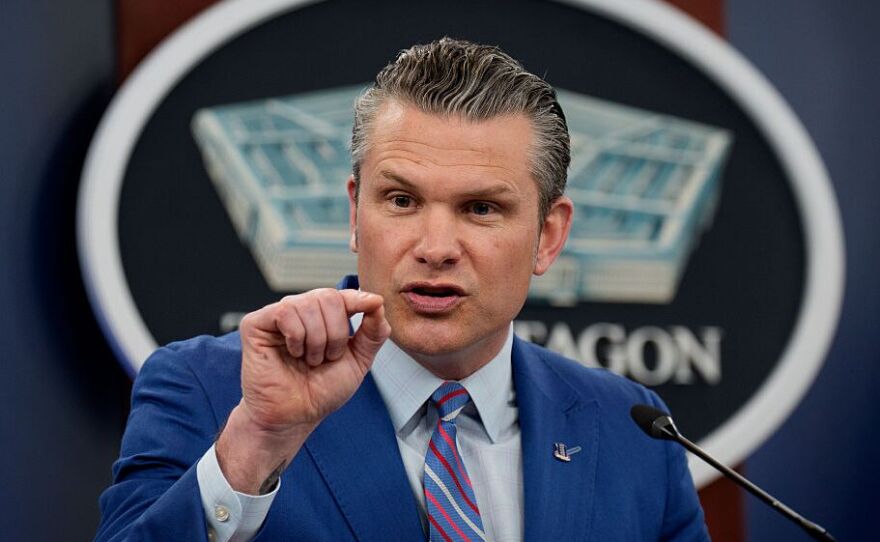
Speaking at the Pentagon, Hegseth delivered a sweeping and unusually blunt address, announcing that all U.S. military and financial aid to Nigeria has been suspended and that President Donald Trump has ordered the preparation of operational plans to protect Christian communities in the country.
The Secretary’s remarks come at a time when international scrutiny is growing over the Nigerian government’s handling of terrorism scrutiny intensified by earlier episodes in places like Adamawa State, where Nigerian Air Force fighter jet was reportedly deployed against locals defending themselves during an attack by armed Fulani terrorist, and by the 2014 fall of Mubi, which briefly allowed Boko Haram to raise its flag and establish a de facto caliphate in the historic commercial town.“The world has looked away for too long”Hegseth criticised global media organisations and Western governments for minimising or reframing attacks on Christians as “farmer-herder clashes,” “pastoral conflict,” or “climate-related tension.”“For sixteen years, Christians in Nigeria have buried their children, rebuilt their churches, and endured unrelenting violence while the world looked away,” he said. “That ends now.”Citing U.S. intelligence assessments, the Secretary said 125,000 Christians have been killed since 2009 and 19,000 churches destroyed, calling the figures “one of the greatest crimes against humanity in modern history.”Airstrikes on Civilians and the Mubi Caliphate:
A Pattern of State Failure and Denial of Genocidal intent
For Nigerians in Adamawa, the Secretary’s speech revived difficult memories of past incidents of genocide in their communities. A local said, telling the story of genocide in Nigeria would not be complete without taking into account one of the most brazen and callous attacks on the people of Numan, in the Southern part of Adamawa where locals who mobilised to defend themselves against armed Fulani terrorist were allegedly routed by Nigerian military Air Force jet which threw several bombs at citizens which enabled the terrorist to avoid capture by the locals.
This happened in 2018, during the administration of President Muhammadu Buhari,and when Air Vice Marshal Sadique Abubakar was the Chief of Air staff, as residents of Numan area, a suburb of Southern Adamawa, accused the Nigerian Air Force of striking local civilian volunteers who had mobilised to repel armed attackers identified by community leaders as militant herders. The incident, widely condemned at the time, fuelled long-standing allegations that security responses in the region were complicit and, in some cases, counterproductive.
The capture of Mubi in 2014, where Boko Haram militants hoisted their flag over government buildings and declared the town part of their “Islamic State,” remains a stark symbol of Nigerian military lapses. Residents fled en masse as the group imposed its authority for days imposing strick Islamic tenets before federal forces retook the area.
Against this backdrop, it could be argued Hegseth’s position was driven by years of negligence, inconsistent or ineffective military operations, and attempts by some elements with the Nigerian government to silence attacked communities, a move which have emboldened extremist groups such as Boko Haram, ISWAP, and Fulani militant group, allowing attacks on Christian villages to become “systematic and unchecked.”
A Direct Warning to Abuja
Hegseth’s message to Nigerian authorities was unusually confrontational.“To the Nigerian government: you have enabled this genocide,” he said. “If you will not protect your Christian citizens, we will with or without your permission.”He also condemned what he described as a pattern of ignored intelligence, delayed prosecutions, and reluctance by security agencies to confront well-known militant cells.“In one recent case,” he said, “a pastor warned the Nigerian Army of an imminent attack on his village. Hours later, 13 Christians were killed after the army dismissed his warning as ‘misinformation.’ No arrest was made. No protection was provided.”
Global Implications
The Secretary framed U.S. action not as a policing effort but as a moral obligation rooted in American strategic and ethical values.“If protecting Christians from genocide is called imperialism, then I am an imperialist,” he declared.He added that the United States intends to target extremist strongholds using advanced surveillance and precision capabilities, saying American forces “do not sleep,” and that militants “cannot hide in jungles, deserts, or mountains.”
Nigerian Reaction Expected to Be Intense
The Nigerian government has yet to formally respond, but diplomatic observers predict strong pushback, particularly regarding the suspension of military aid and the suggestion of unilateral U.S. intervention.Security analysts warn that the announcement could reshape Nigeria–U.S. relations and significantly alter the balance of the fight against insurgency in the Lake Chad Basin.
For Christian Communities, a Turning Point?
For many Christians across the Middle Belt and Northeast, Hegseth’s declaration may represent the first major international acknowledgment of their plight in over a decade.“You are not forgotten,” the Secretary said. “America stands with you, and America’s warriors are coming.”As tensions rise, the world now watches to see whether the U.S. will carry through on its most forceful foreign security stance toward Nigeria in years and how the Nigerian government will respond to unprecedented public accusations from one of its most powerful allies.

 News Rendezvous
Leave a comment