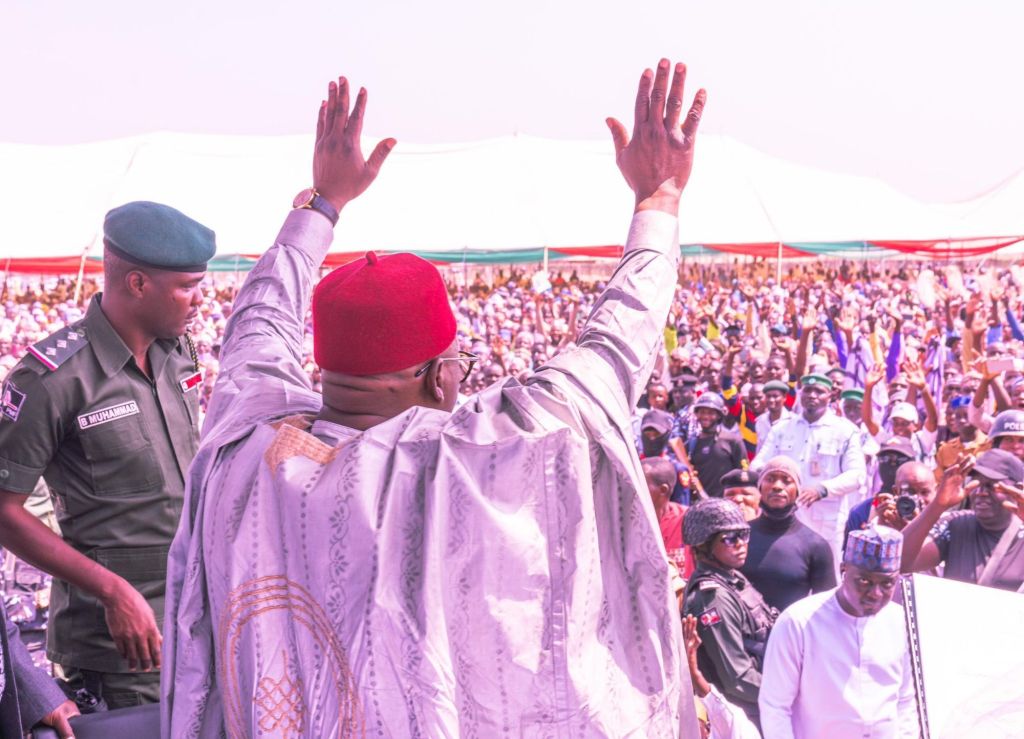
Hong, Adamawa State – A historic moment is unfolding on February 14, 2025, as Governor Ahmadu Umaru Fintiri will officially present the staff of office to Töl Alheri Bulus Nyako, marking the full restoration of the Huba Chiefdom after more than a century of struggle for recognition.
The event which will be held in Hong, will be attended by dignitaries, traditional rulers, and thousands of jubilant Huba people, who will witness the fulfillment of a long-standing quest for their political and cultural autonomy.
A Struggle Rooted in History
The Huba people, also known as Kilba, are one of the major ethnic groups in Adamawa State. Oral history traces their origins to the Middle East, with migrations through Egypt, Sudan, Borno, and Mandara Hills before settling in their present location. For centuries, they maintained an independent political structure, resisting external domination.
Their governance system evolved over time, culminating in a centralized kingdom in 1356 under Tol Furkudel, brother of Yamta Wala, the founder of the Biu royal dynasty. The Huba kingdom was recognised for its well-structured administration, likened to Ancient Egypt by 19th-century German explorer Dr. Heinrich Barth.
Unlike many neighboring territories, the Huba Kingdom never fell to the Fulani Jihad, maintaining its sovereignty alongside Sukur. This independence was reaffirmed in 1898 when the sons of Rabeh, a prominent military leader, signed a treaty recognizing Huba’s autonomy from both the Fulani and Borno Empires.
However, British colonial rule in the early 20th century altered this status. Despite being initially classified as a distinct division within Adamawa Province, the Huba Chiefdom was gradually merged with the Yola Division. The Zumo Treaty attempted to guarantee its autonomy, but over time, the status of Töl Huba was downgraded to an ungraded district head.
Decades of Unfulfilled Promises
Multiple efforts to restore the chiefdom’s status were made over the years. As early as 1902, colonial Resident G. N. Barclay recommended First-Class status for the Chief of Kilba. In 1986 and 1988, Governors Yohanna Madaki and Jonah Jang approved Second-Class status, but these decisions were never implemented. Instead, leaders advocating for Huba’s independence faced intimidation.
Governor Fintiri’s Historic Intervention
The long struggle took a decisive turn with the emergence of Governor Ahmadu Umaru Fintiri, known for his commitment to justice and equity. In December 2024, he created the Huba Chiefdom along with six other emirates and chiefdoms across the state. On January 3, 2025, he approved the appointment of Töl Alheri Bulus Nyako as the Töl Huba, ensuring legal and administrative frameworks were in place for the chiefdom’s governance.
In addition, Governor Fintiri expanded the chiefdom’s administrative structure, creating fourteen districts: Hong, Shangui, Pella, Uding, Kulinyi, Hyema, Gaya, Hildi, Mugwahi, Mayo Lope/Gashala, Uba, Mufa, Dugwaba, and Yadul.
A New Era for the Huba People
With today’s presentation of the staff of office, the Huba people have officially reclaimed their historical identity and governance structure. The event marks not just the restoration of a chiefdom but also the recognition of a people’s resilience in preserving their heritage and autonomy.
As Töl Alheri Bulus Nyako assumes his role, the Huba Chiefdom looks forward to a new chapter of cultural revival, unity, and progress, firmly anchored in the traditions that have sustained them for centuries.

 News Rendezvous
Leave a comment