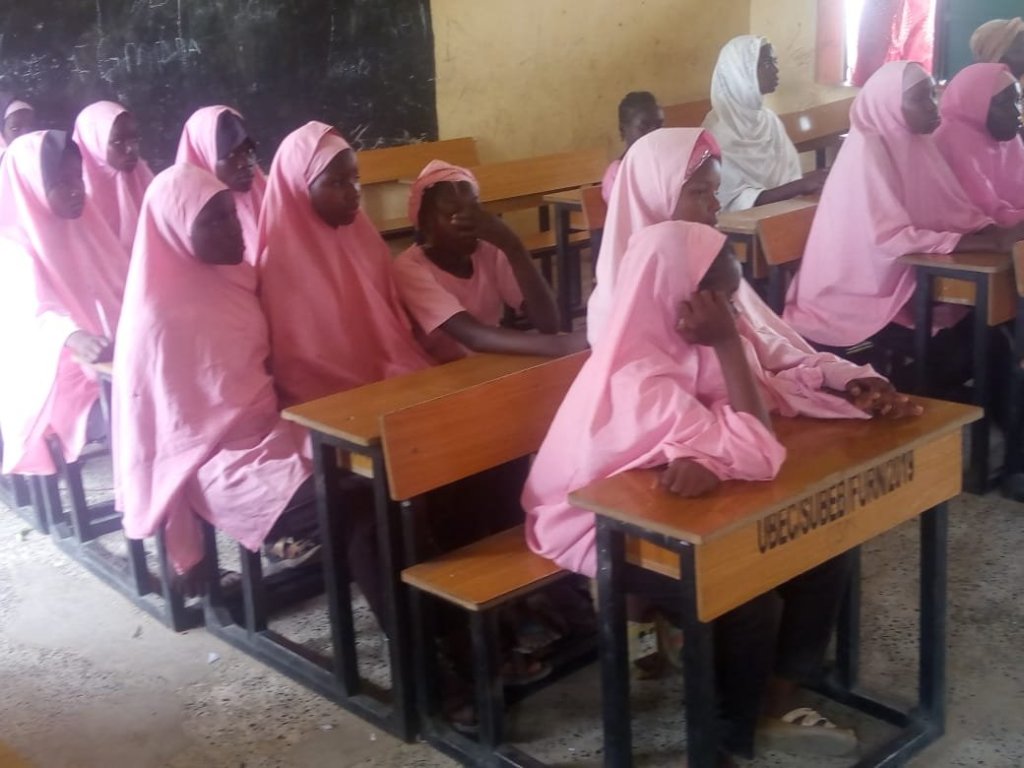
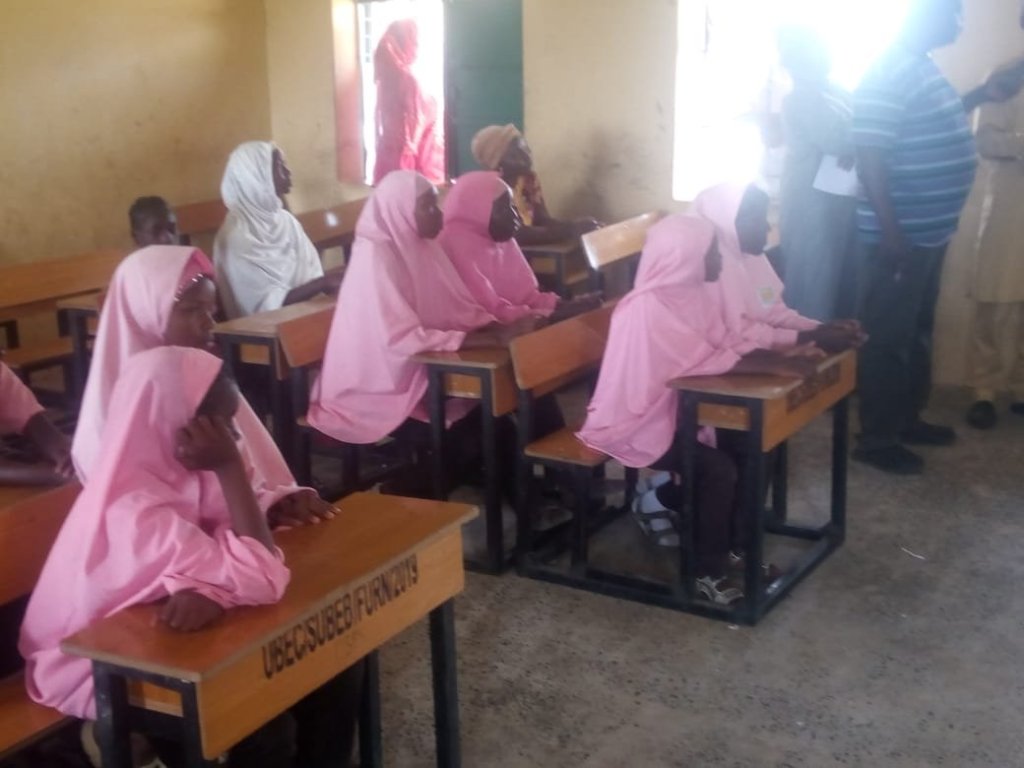
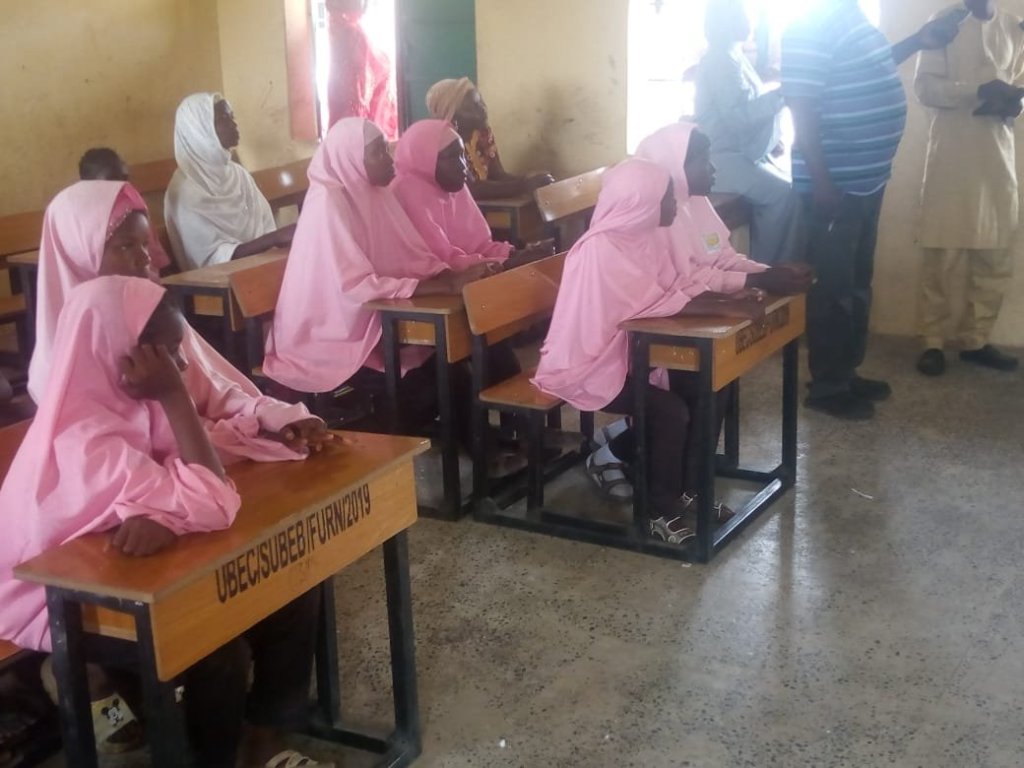
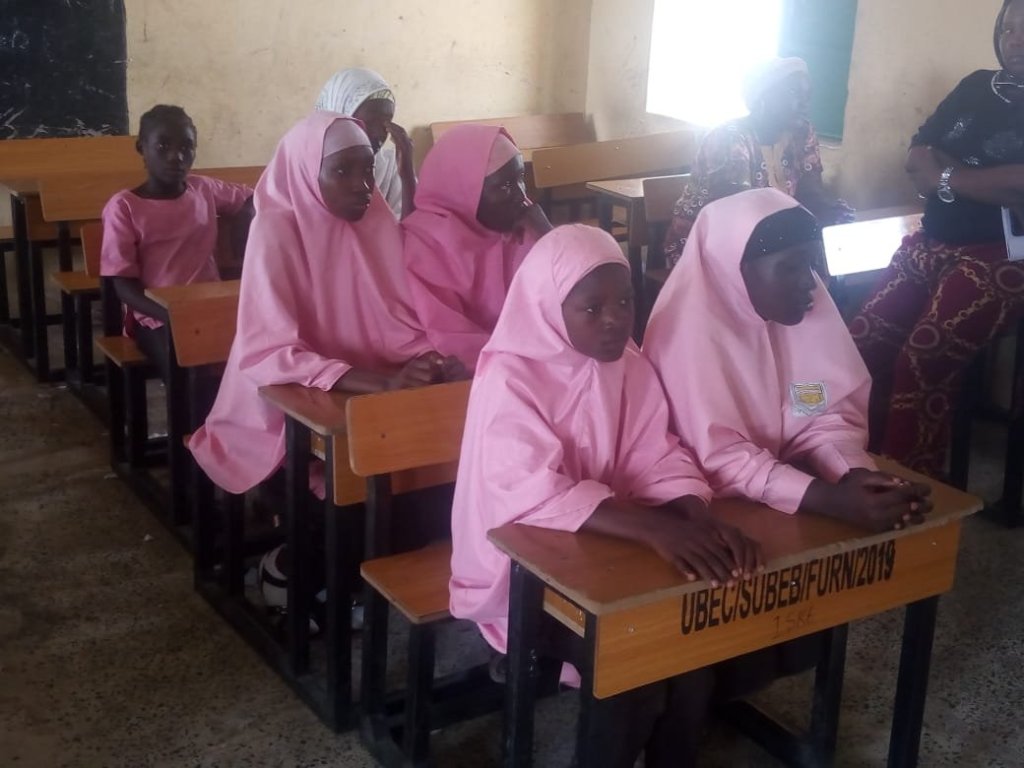
A pupil, a young Nigerian girl, Naomi, 15, who struggles with menstrual hygiene management due to poverty and lack of education about it, said inadequate access to menstrual hygiene products, such as sanitary pads, clean environment, toilet facilities, was a major source of frustration for her and other young girls like her.
Naomi narrating her ordeal said, “For me, the silence around menstrual hygiene by adults as if nothing happens is what worries me most, because it is a source of worry for girls and it dampens our confidence.
“I had returned home completely stained sometimes back because the period started when I was in school, I didn’t know I was stained and walked all day in school until I returned home, that was when my aunt noticed it and if I did, I didn’t have anything to help myself with.
“I felt like not going back to school the following day.”
That was the challenge UNICEF set out to address in Jada local government area of Adamawa, northeast Nigeria where about 93 girls, from about 31 local schools in Adamawa have been trained on Menstrual Hygiene as part of events marking the 2023 World Menstrual Hygiene Day.
This year’s world menstrual hygiene day tagged, “Focusing on Commitment to Improving Menstrual Health and Hygiene, including Access to Products, Services, Education, and Information about Menstruating Women and Girls, to Better Understand Menstrual Health and Help End Stigma,” was marked by a UNICEF-led initiative under the WASH project funded by the Netherlands Directorate-General for International Cooperation – Accelerated Sanitation and Water for All Programme II on menstrual hygiene with emphasis on the making of reusable sanitary pads using locally sourced materials and the project is already touching hundreds of young girls lives in Adamawa.
A 14-year-old Aisha Suleiman, who lives in Jada with her grandparents, said learning how to make and maintain sanitary pads from local fabrics was a game-changer in her life because obtaining a sanitary pad during her period was a luxury her family could not afford but that is in the past now.
Speaking to Daily Sun, the Aisha Suleiman, a pupil at Sohon Tike primary school said,
“Menstrual pads are expensive, they cost between 600-1000 naira. This is not something my family can afford.
“Recently, we were trained on how to take care of ourselves to avoid contracting infections during periods and we were also trained on how to make reusable sanitary pads. Now, I know how to make the pads and use them during my period. It is cheaper and easy to use and they say we can use them for up to six months.
“Now I wouldn’t miss school during my period because I can make the pads myself and also wash and reuse them when the need arises.”
Speaking to Daily Sun, the headteacher of the Tsohon Tike primary school, Musa Umar said, the training the teachers, students and members of the School Based Management Board (SBMC) received was an important launch into open discussion on sn important issue that affected the girl-child for years he said, normally a conservative society like his community in Jada, would not talk about menstrual hygiene but now, he as the principal had severally has to explain to parents and guardians about the project when the need arises.
Umar said, “This is a positive and impactful project by UNICEF on students and the school itself. First, we now have clean bathrooms and toilet facilities which the students can use. We also have water facility which is great for the school and it is helping the girls to feel at home and stay in school.
“I am proud of the changes in the girls and the awareness it has brought on both parents, pupils and staff. Just realizing that they could earn some money from making reusable sanitary pads alone is refreshing to most women and girls here.
“UNICEF has already constructed gender gender-sensitive latrines in 31 schools, separate for boys.”

 News Rendezvous
Leave a comment