– Adamawa Has 33% of Girl-Child, 30% of School Age Children Still Out of School- ECN
A network of Civil Society Organizations under the auspices of Education Champions Network (ECN) have raised the alarm that as it stands now in Adamawa state, about 30 percent of primary school-age children are not enrolled in any school and that about 33 percent of girls of primary school age still don’t have access to any school and that the state of out of school children in Nigeria has remained bleak and the same since 2010 and might persist until government and political actors behave differently.
ECN says Nigeria, alongside Pakistan and India are the top three ranked countries with the highest rate of out-of-school children with the rate estimated to have shoot up by more than fifty percent.
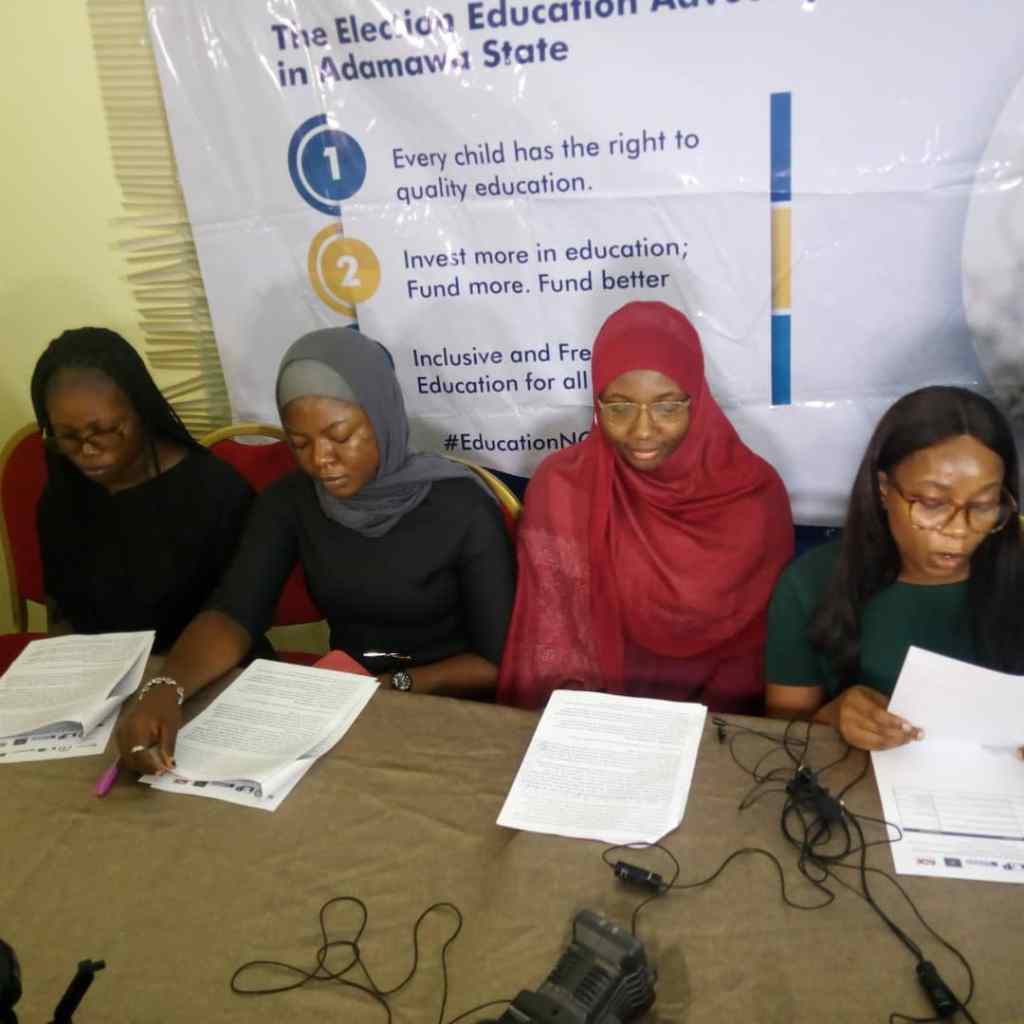
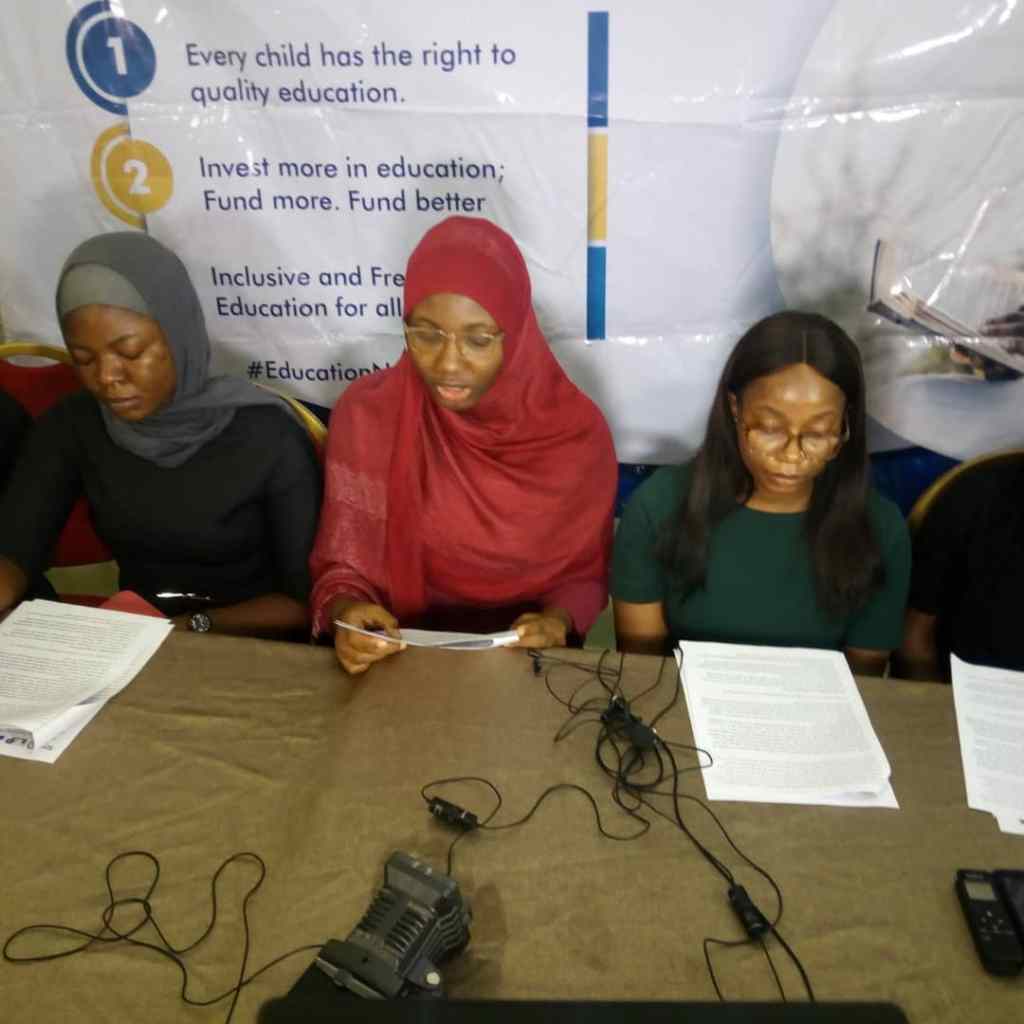
ECN made the remarks at a press conference, Wednesday, in Yola, Adamawa State.
Civil society organisations while setting Education benchmark for political governments and political candidate said, it is sad to note that the standard of education in the country has continue to plummet and where governments worked towards creating a favourable environment for quality education, those efforts are being upended by hidden charges, lack of facilities, absence of manpower, basic infrastructures and instructional materials. ECN insists that politicians and governments at all levels must do more by ensuring increased budgetary allocations for education, ensure the safety of all children in schools, ensure adequate instructional materials, equip and train teachers to perform their task.
According to ECN, “Nigeria envisions a Nigeria where all women and girls, particularly the most vulnerable, have access to 12 years of free, safe, quality education.
“Records have shown that not only is the standard of education falling but also the rate of out-of-school children particularly the girl child does not give hope for the future of the girls and the people of Adamawa state. With about 20 million out-of-school children in Nigeria, 60% of this figure is from the Northeastern part of the country inclusive of Adamawa state.”
Giving a review of the state of education in Adamawa state ECN said, “In Adamawa State, 30.2% of primary school-age children are not enrolled in any school. 32.7% of girls of primary school age are out of school compared to 27.7% of boys.
“The number of out-of-school children for junior and secondary school-age children is even higher across both genders but more so for girls.
“This record is further confirmed by the national manifesto of ECN in Nigeria states that the number of out-of-school children of primary school age in Nigeria increased by 50 percent from 6.4 to 9.7 million, while the out-of-school rate has remained constant at 28 percent since 2010.”
The group of Civil Society Organisations presenting their assessment of the state of education in Nigeria said, “Nigeria is among the top three countries – alongside India and Pakistan – with the most children and youth excluded from education, and the vast majority of these children are girls.
“The implication of this is evident in the inability of the country to harvest the benefits of basic education to Nigeria’s economy. It is estimated that GDP growth of up to $243 billion will be gained if every girl completes a full 12-year cycle of education in Nigeria.
“With the level of human resources available to the country, and if well harnessed, Nigeria will not be mentioned or categorized as educationally poor alongside the others in Southeast Asia.”
It further adds that, “Today, Nigeria is deep-seated in multifarious conflicts and violence covering all the geopolitical zones of the country be it Boko Haram, banditry, farmer-herded clashes, and other criminal elements. The advent of these crises has taken a toll on the country’s economy, the people, and especially women and girls.
“The ECN believes strongly and notes that equitable access to quality education, particularly for girls, can reduce conflict and insecurity across the country by up to 37 percent. Similarly, providing free, safe, and quality education for up to 12 years will reduce early marriage, and social injustice, leading to a healthier, wealthier, and happier population.”
ECN appeal Adamawa state and Nigeria at large saying, “Stakeholders in Nigeria and Adamawa state should take up the challenge of championing the cause of basic education for all children of school-going age and particularly the girl child in the state.
“The current administration in Adamawa state has done its best by providing free education at the basic education levels but more needs to be done concerning girl child education in the state.
“It should however, increase state-level financing for education by spending at least 22.5% of the state’s budget in line with the commitment made by the federal government. Provide counterpart funding to access UBE funds, to allow for increased financing of the education sector. Strengthen the education monitoring and evaluation systems by implementing the UNESCO National Education Account to guide proper budget preparation and implementation, and make budgets gender-responsive, transparent, and utilized in education.”
It further recommends that state governments must, “Ensure schools are truly free for 12 years by eliminating hidden fees such as education levies, PTA fees, and exam fees in all schools.
“Schools should meet standards that ensure quality learning for all children, proper school infrastructure, availability of learning and instructional materials, adequate number of teachers for all core subjects, and recreational facilities. Ensure improved welfare and capacity building for all teachers to provide quality learning through the implementation of professional development programs, teacher promotion, new minimum wage, and proper accommodation when necessary. Provide the educational resources, teacher training, and ICT infrastructure needed to implement STEAM education and vocational skills training in all secondary schools.”
ECN in its press briefing challenged state governments to effectively and immediately roll out the implementation of the Safe Schools Plan of Action and the National Policy on Safety, Security, and Violence-Free Schools and to provide for functional, safe, inclusive, and gender-responsive water, sanitation, and hygiene (WASH) facilities in schools to keep girls in school during their periods, protect students from the risks of open defecation and prevent them from contacting WASH-related infections due to lack of water and hand washing facilities in schools.
The group maintains that the Nigerian child has the right to free basic education regardless of their circumstances and the Nigerian government must be seen to promote this right by investing the needed resources towards achieving education for all.
The project is aimed at empowering the traditional and religious leaders, media, school girls, and the general public to hold the leaders accountable and ensure that political candidates to include specific education asks in their agenda during electioneering campaigns and implement the same when elected. The project is part of the Joint Action Grant supported by Malala Fund

 News Rendezvous
Leave a comment